
Cable: length, stiffness, and pipe match
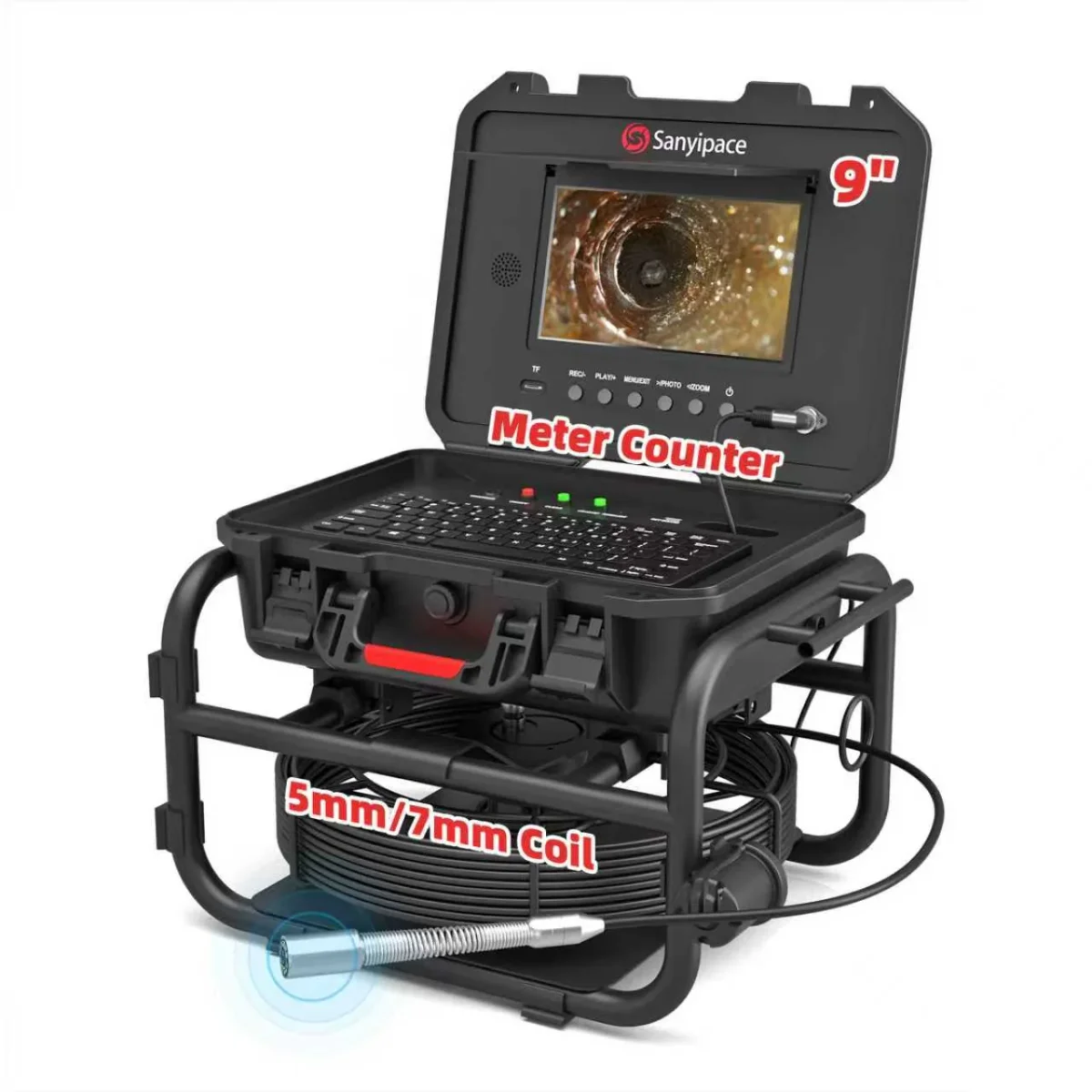
Cable stiffness is a trade: stiff cable pushes 100+ feet through 4–6 inch laterals but will not round tight indoor bends; flexible cable navigates 2-inch traps and wyes but coils uselessly past 60 feet in a big pipe. Buy for the pipe you inspect most — a municipal contractor and a residential plumber need different reels.
Reel construction matters as much as cable: a welded steel frame with a drag brake survives truck beds, while a slipping brake kinks cable at the reel mouth. Inspect the push-rod termination at the head before every job — that joint flexes thousands of times per inspection and is the most common field failure.
- Measure your longest real run (cleanout to street) and buy cable longer than it.
- Confirm head diameter passes your smallest trap or bend before ordering.
- Check reel brake, frame welds, and head termination on delivery day.
Head and sonde: what the locator hears
Self-leveling heads keep the image upright so a homeowner or inspector reads the footage without interpretation; fixed heads show rotated video that a trained operator reads fine but a customer cannot. Pan-and-tilt heads add inspection detail in large pipe but cost more and add a failure point — match the head to who reads the video.
The 512Hz sonde built into most inspection heads is what your above-ground locator hears. Confirm the sonde frequency matches your locator (512Hz is the standard; some European locators differ), and test the pair on the surface before the first paid job — a sonde the locator cannot hear is just weight on the cable.
- Self-leveling for customer-facing work; fixed head acceptable for operator-only reads.
- Sonde frequency confirmed against your locator — 512Hz standard.
- Sonde + locator tested on the surface before the first job.
Monitor, recording, and daylight readability
A monitor you cannot read in sunlight wastes the whole rig. Confirm daylight-readable brightness, a sunshade in the kit, and recording that timestamps footage — timestamped video is what municipalities and insurance adjusters accept, and it ends payment disputes.
Battery runtime decides whether you finish the street: confirm the monitor and reel batteries cover your longest inspection day plus a margin, and carry the charger in the truck. A camera that dies at the property line creates a callback, not a paycheck.
- Daylight-readable monitor with sunshade; recording with timestamps.
- Batteries sized to the longest inspection day plus margin; charger in the truck.
- Footage naming convention set before the first job (address + date).
Line prep that keeps the camera alive
Cameras die young in unprepared lines. Flush heavy grease and debris before pushing — forcing the head through a grease cap smears the lens and risks lodging the head. Confirm the cleanout gives a straight shot; a camera forced through a tight directional fitting kinks cable at the head termination, the exact joint that fails most.
Mark distance as you push so footage maps to the surface: note the counter at the cleanout, at each wye, and at the defect. Those three numbers plus the sonde locate are what turn a video file into a dig sheet the crew can use without you standing over them.
- Line flushed of grease/debris before the camera goes in.
- Cleanout access confirmed straight; no forced directional fittings.
- Counter logged at cleanout, wyes, and defects for the dig sheet.
Locator technique: marking the dig spot
The locator turns footage into a marked dig location. Sweep perpendicular to the suspected line to find the peak signal, then verify by tracing the line in both directions — a single peak reading without a trace in both directions is often a false signal from a nearby utility. Mark the surface with the depth reading at the defect plus paint and a flag, and photograph the marks with the footage counter visible.
Depth readings need judgment: soil type, adjacent utilities, and sonde angle all shift the number. Confirm depth at two adjacent points and average rather than trusting a single reading, and hand-dig the last foot around the mark. A careful locate plus careful potholing is what separates a one-hole repair from a trench across the yard.
- Peak found by perpendicular sweep; line traced both directions before marking.
- Depth averaged from adjacent readings; marks photographed with counter visible.
- Hand-dig the final foot — locates guide, they do not replace careful digging.
Pre-job checklist
Run this before every inspection: head and sonde tested with the locator, cable inspected for kinks at the reel mouth, monitor charged with storage space confirmed, and the cleanout access verified with the customer. Ten minutes of checks prevents the mid-job failures that turn a one-hour inspection into a rescheduled day.
- Sonde heard by locator on surface test; cable kink-free at reel mouth.
- Monitor charged, storage free, timestamps enabled.
- Access point confirmed; pipe diameter and expected distance match the reel on the truck.
Quoting inspection work: flat rate vs per-foot
Price inspections so the camera earns its keep: flat rate for standard residential laterals with a defined scope (one line, footage delivered same day), per-foot beyond a base distance for long municipal runs, and a separate locate-and-mark fee when the customer wants paint on the ground rather than just video. Scope in writing prevents the "while you are here, check the other three lines" conversation from becoming free work.
Bundle the services the camera enables: a locate fee, a written defect report with distance readings, and a repair quote reference the footage directly. Contractors who deliver timestamped video plus a marked dig location close repair jobs at far higher rates than those who email a video file — the inspection is the sales call, so price and package it like one.
- Scope written before the camera goes in; extras priced, not free.
- Footage plus marks plus defect distances packaged as the deliverable.
Cleaning the camera: the 10-minute habit that doubles cable life
Push cable fails from grit left on the rod, not from age. After every job, wipe the full cable length back onto the reel with a rag — never reel in a dirty cable through the guide. Rinse the head and sonde area, inspect the termination spring for cracks, and dry the reel mouth where water collects and corrodes the brake.
Store the reel upright in a dry truck bay with the brake engaged so cable cannot unspool in transit. Once a month, run the full cable out on clean pavement, inspect for kinks and jacket wear, and test the sonde with the locator before the next job needs it. Ten minutes of care after each inspection is what separates a five-year reel from a two-year replacement order.
- Cable wiped clean on rewind; head rinsed and termination inspected.
- Reel stored upright, brake engaged, in a dry bay.
- Monthly full-length payout inspection plus sonde-locator test.